




Spring & Summer Mouse Control: How to Keep Mice Out of Your Home in Warm Weather
Most people think of mouse problems as a winter issue. In reality, spring and summer are peak season. Warmer temperatures accelerate breeding, and a single pair of mice can produce over 60 offspring between April and September. Meanwhile, open windows, outdoor dining, and garden activity create exactly the conditions mice need to thrive.
If you wait until you see a live mouse, the problem is already weeks old. Here's how to get ahead of it.
Spot the Signs Early
Mice are nocturnal and avoid open spaces, so direct sightings are rare until populations are well established. Instead, look for these indicators:
- Droppings: small, dark, rice-shaped pellets (3–6mm), most often found behind kitchen appliances, inside cabinets, and along baseboards. A single mouse produces 50–75 droppings per day.
- Gnaw marks: rough-edged bite marks on food packaging, cardboard, or wiring. Gnawed wiring is a serious fire hazard.
- Grease smudges: dark rub marks along walls where mice follow the same path repeatedly.
- Sounds at night: scratching or scurrying inside walls, ceilings, or attic spaces between dusk and dawn.
A quick detection trick: sprinkle flour along walls before bed and check for tiny footprints in the morning.
The Four-Layer Defense System
Effective mouse control works in layers. No single action is enough on its own.
1. Cut Off Food and Water
Wipe down kitchen surfaces every evening. Store all pantry food and pet food in airtight, hard-sided containers. Pick up pet bowls before nightfall. Clean outdoor grills after every use, because grease residue is a major attractant. If you have bird feeders, add a seed-catching tray or take them down for the season.
2. Seal Entry Points
A small mouse can fit through any gap wider than 6mm, roughly the width of a pencil. Walk your home's exterior and inspect where pipes enter walls, beneath doors, around vents, and at foundation corners. Seal small gaps with steel wool backed by caulk. Cover larger openings with metal mesh (6mm or smaller). Install metal door sweeps on garage and basement doors. Do this inspection every spring. Winter freeze-thaw cycles crack last year's sealant.
3. Eliminate Outdoor Cover
Keep a 30cm vegetation-free border along exterior walls. Store firewood elevated and well away from the building. Trim tree branches that touch or overhang the roof. Rake debris away from foundations regularly.
4. Deploy Traps
Place traps flush against walls, entrance parallel to the baseboard, directly on confirmed activity paths. Use a pea-sized smear of peanut butter as bait. It's sticky, aromatic, and forces the mouse to commit. Set at least two traps per active area. Check daily and replace bait every two to three days.
Why We Recommend the OWLTRA OW7
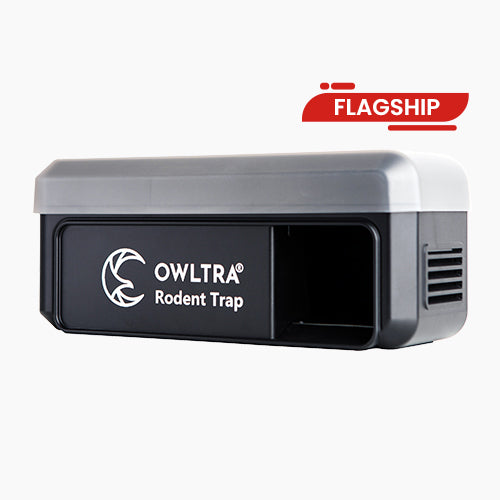
Spring and summer mouse control has specific demands. You need a trap that works outdoors in wet weather, is safe around kids and pets, and doesn't require you to check it constantly. The OWLTRA OW7 Electronic Rodent Trap was designed for exactly this scenario.
It features a waterproof cover for outdoor deployment, an enclosed tunnel design that keeps the mechanism inaccessible to children and pets, and a smart LED that tells you from across the room when a catch has been made. Disposal is completely contact-free. Just open the side door, tilt, and the mouse slides into the trash. It runs on D-cell batteries for remote locations or USB power for indoor convenience.
The result is a trap you can set along your home's perimeter in April and rely on through September with minimal daily effort.
→ [Explore the OWLTRA OW7 and start protecting your home today]
→ Already have yours? [Read our complete setup and troubleshooting guide]